Community is one of the most overused words in growth strategy, and one of the most misunderstood.
If you've spent any time around startup, marketing, or founder circles, you've probably heard the advice: "You need to build a community." It's become one of those recommendations that sounds universally true. Launch a community. Create a Facebook group. Start a Slack channel. Host events. Build engagement. The problem is that "build a community" is often treated as a strategy in itself rather than a result of doing other things well.
I've seen businesses spend months trying to create a community around a brand before they've clearly defined why people should care about the brand in the first place. They invest in platforms, events, newsletters, and engagement tactics, only to discover that participation never really takes off. The issue usually isn't the platform. It's the foundation underneath it.
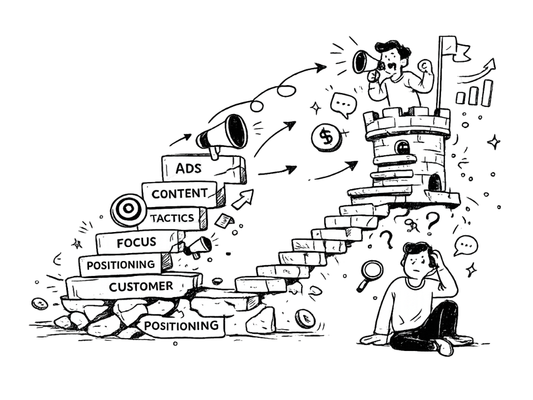
Community isn't a strategy. It's an outcome.
What People Actually Join Communities For
Nobody joins a community because the word "community" appears in a brand strategy document. People join because they get something meaningful from it. Sometimes that's knowledge. Sometimes it's belonging, entertainment, support, inspiration, identity, or access to people who share similar interests. The strongest communities aren't built around businesses. They're built around shared value.
Think about the communities you participate in yourself. Chances are you're not there because of the platform. You're there because of what the platform enables. The connection comes first. The community follows.
The Brands We Think Of As Having Communities
When people talk about brands with strong communities, they're usually referring to businesses whose customers naturally gather around a shared interest, lifestyle, belief, or problem. Those brands didn't wake up one day and decide to manufacture a community. They focused on creating something people genuinely cared about. Over time, customers started talking to each other. They shared experiences, recommended the product, created content, and formed relationships around a common interest. The community emerged because there was already something worth gathering around.
The best communities are discovered, not manufactured.
A Better Question to Ask
Instead of asking "How do we build a community?", try asking: "What are we creating that people genuinely want to talk about?" That's a much harder question. It forces businesses to think about the value they're providing rather than the tactics they're using. It shifts attention away from community-building tools and toward the product experience, the brand purpose, and the problem being solved.
- What problem are we helping people solve?
- What makes customers recommend us?
- What do customers consistently talk about after using our product?
- Are people already connecting with each other organically?
- What would customers miss if we disappeared tomorrow?
The Mistake Many Brands Make
One of the biggest mistakes I see is trying to create engagement before creating enough value. A business launches a community space and immediately starts worrying about participation. They ask why people aren't posting, commenting, or inviting others. But engagement is rarely the starting point. It's the result of customers feeling that being part of something is genuinely useful, enjoyable, or meaningful. Without that foundation, community-building activities often feel forced. You can't manufacture belonging. You can only create the conditions that make it possible.
People don't join communities because they're asked to. They join because they find value in being there.
Community Is a Signal
One of the reasons community is so powerful is that it's often a signal that a brand is doing many other things right. Strong communities usually emerge when customers trust the brand, share common interests, experience meaningful outcomes, recommend the product to others, and feel connected to a larger idea or mission. In other words, community is often evidence that customer understanding, positioning, product experience, and brand value are already working. That's why it should be viewed as an outcome rather than a starting point.
If you're struggling to build a community, the answer may not be another platform, event, or engagement tactic. It may be a deeper understanding of what your customers genuinely care about. Because real communities aren't built on community-building tactics. They're built on consistent value. People don't gather around communities. They gather around value.