Guests had questions at every stage of their stay — and no good way to get answers. I designed an AI-powered concierge that transformed reactive customer support into a proactive, personalised guest experience delivered across the full stay journey.
Guests needed different information before arrival, during their stay, and after checkout. Yet communication was often repetitive, reactive, and disconnected from guest context.
This project explored how an AI-powered WhatsApp concierge could deliver timely, personalised guidance while creating a more seamless guest experience.
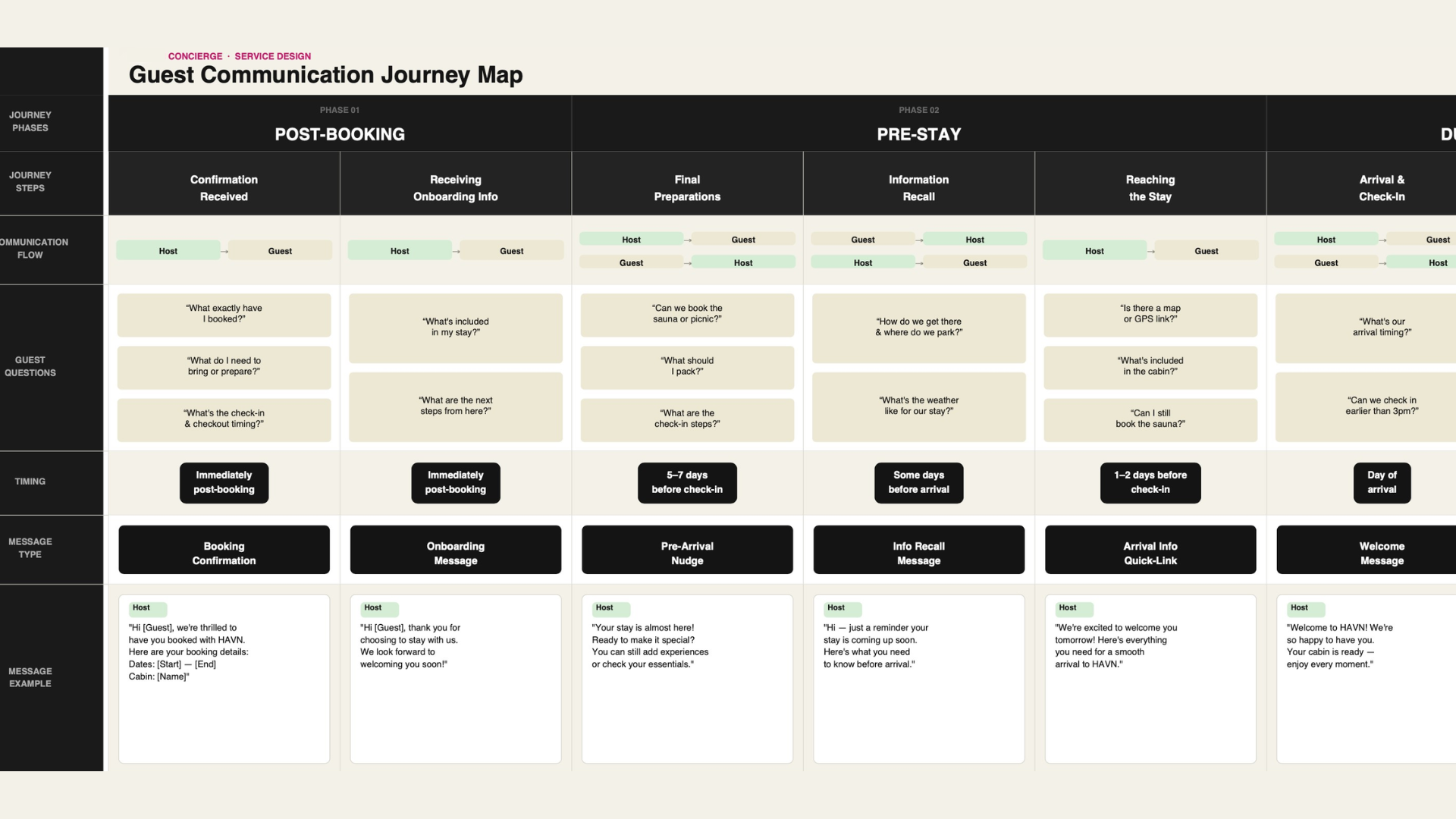
Mapped guest questions, emotions, and information needs across every stage of the stay journey.
Designed high-level conversation architecture and personalisation logic for the concierge system.
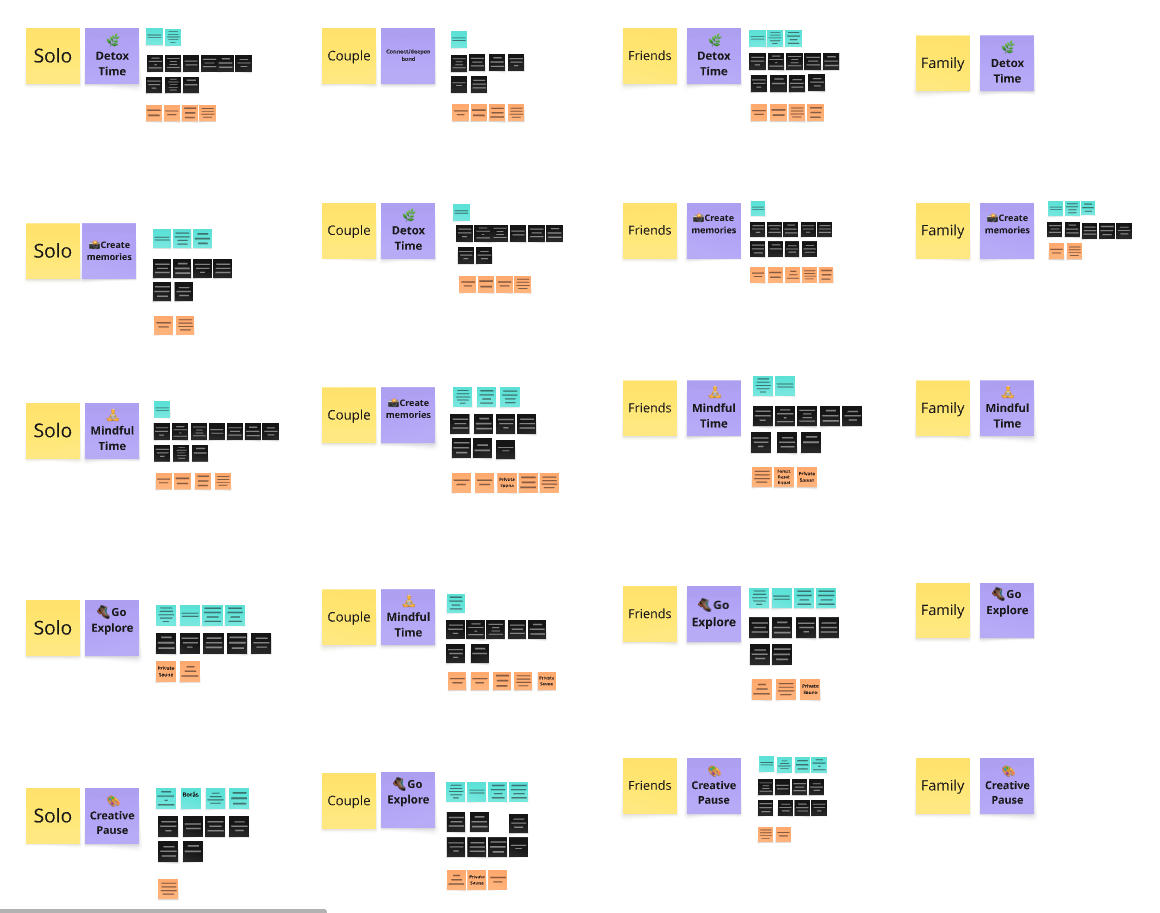
Created guest segments and experience bundles based on travel group type and stay intention.
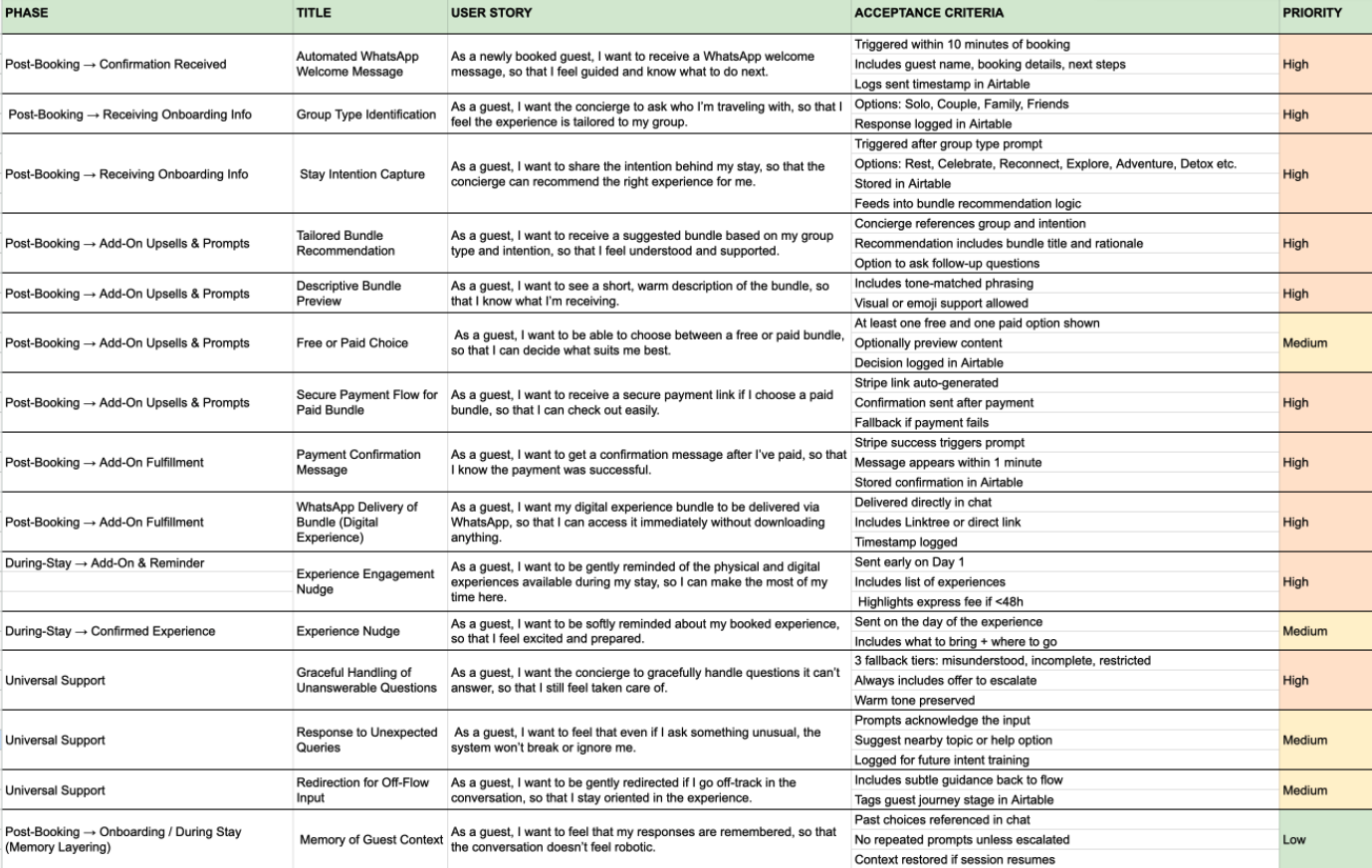
Wrote user stories, acceptance criteria, and detailed flow documentation ready for development.
Mapped the end-to-end guest journey, identifying emotional needs, friction points, and key communication moments across post-booking through post-stay.
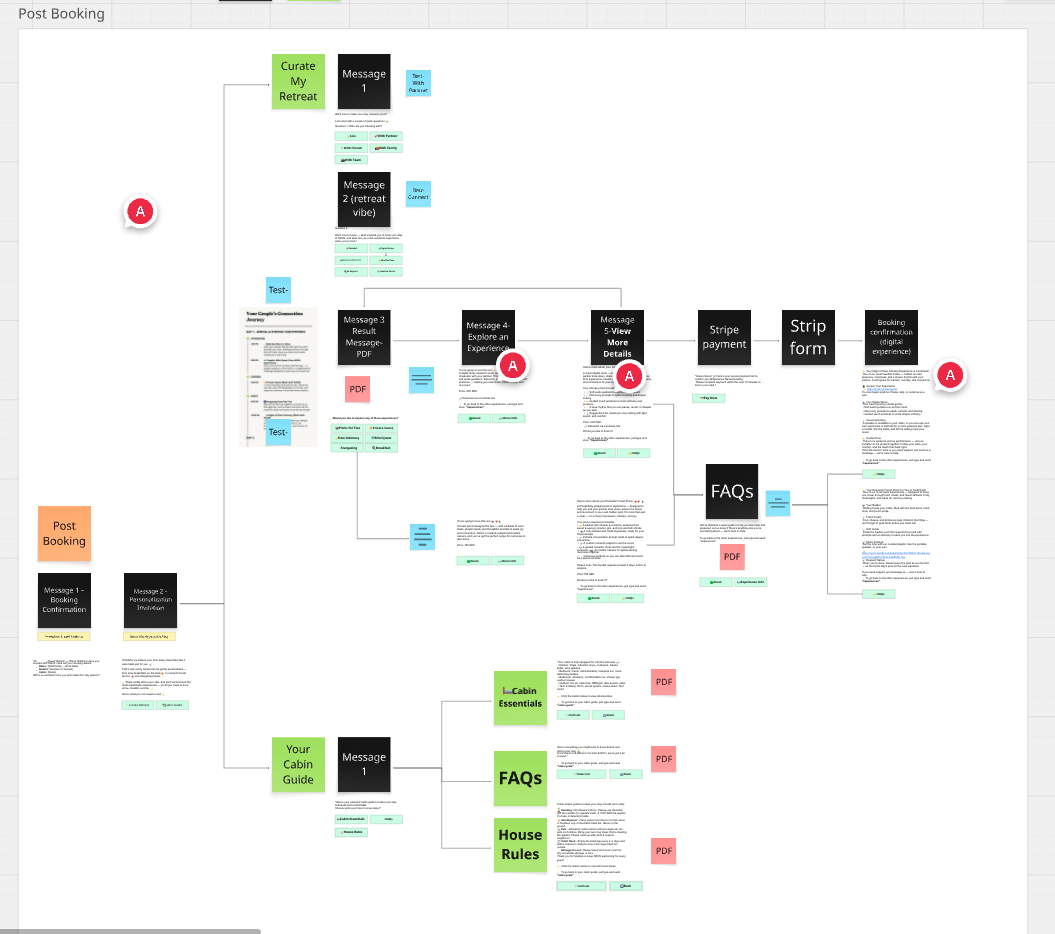
Designed the concierge conversation flows, personalisation matrix, and experience delivery logic — translating guest needs into a structured system.
Defined user stories with acceptance criteria, prioritised functionality, and documented the MVP scope in a format development-ready teams could act on.
The challenge wasn't a lack of information. It was timing, context, and relevance. Guests repeatedly asked the same questions at key stages of their journey, while communication remained largely one-size-fits-all.
How might we move from answering guest questions to proactively designing guest experiences?
Post-booking confirmation, personalised preparation guides, experience recommendations, and arrival information — delivered at the moments guests were actively thinking about their trip.
On-site support, experience prompts, FAQ responses, and proactive check-ins. The concierge handled logistics so the team could focus on moments that required genuine human warmth.
Checkout guidance, reflection prompts, and return-visit nurturing — turning a single stay into the beginning of an ongoing relationship with the retreat.
Each piece of work was grounded in what guests actually needed — not what seemed technically interesting.
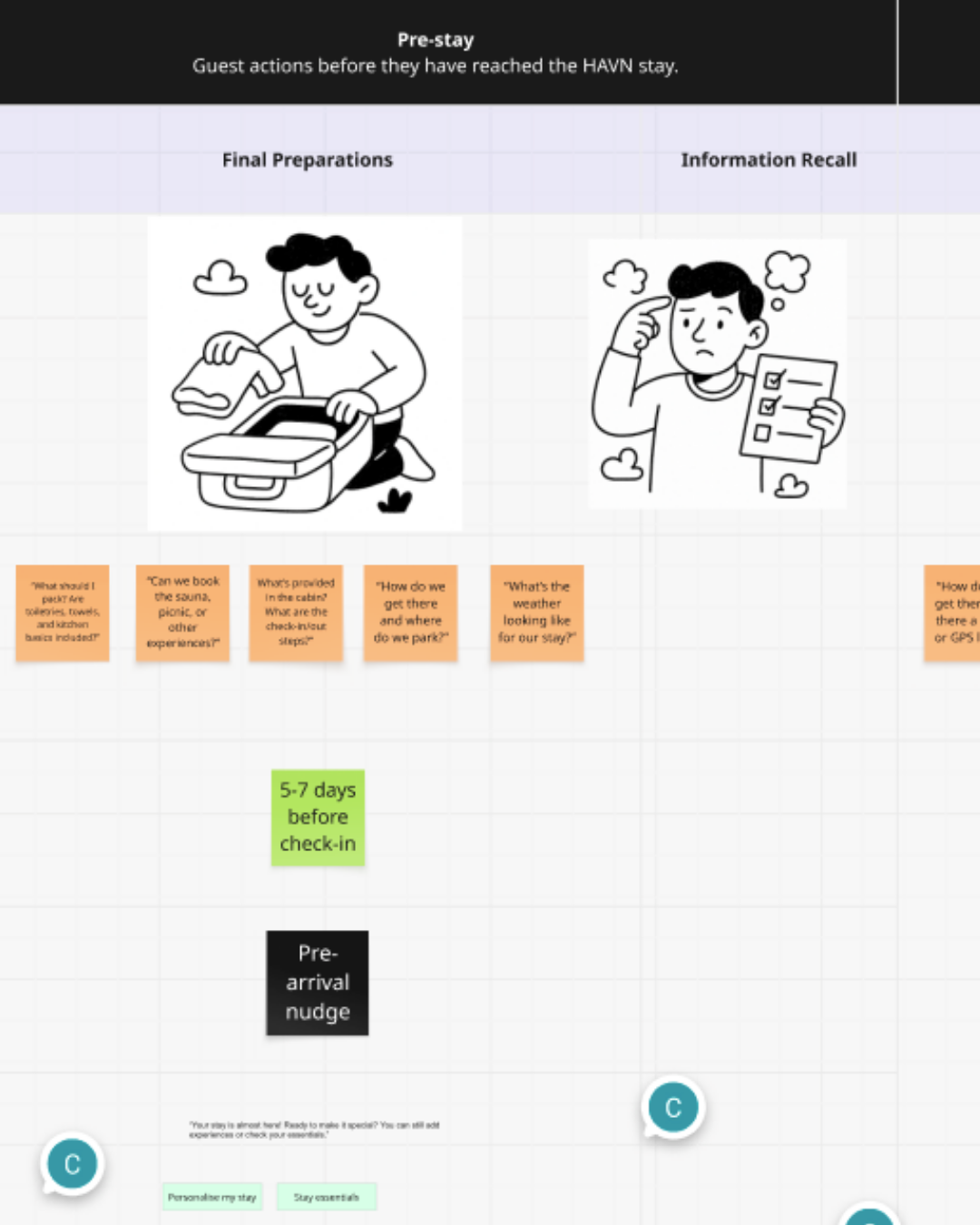
Mapped the full guest journey from booking confirmation to post-checkout — identifying the questions guests asked, the emotions they experienced, and the communication opportunities the team was missing.
Identified 12+ key moments across the journey where proactive communication could reduce anxiety and increase delight.
Mapped the emotional arc of the guest — from anticipation and excitement through arrival and into the post-stay reflection phase.
Categorised guest questions by journey phase, priority, and frequency — forming the basis for the concierge's content architecture.
Identified where guests typically dropped off, felt confused, or needed to contact the team — informing where the concierge would have the most impact.
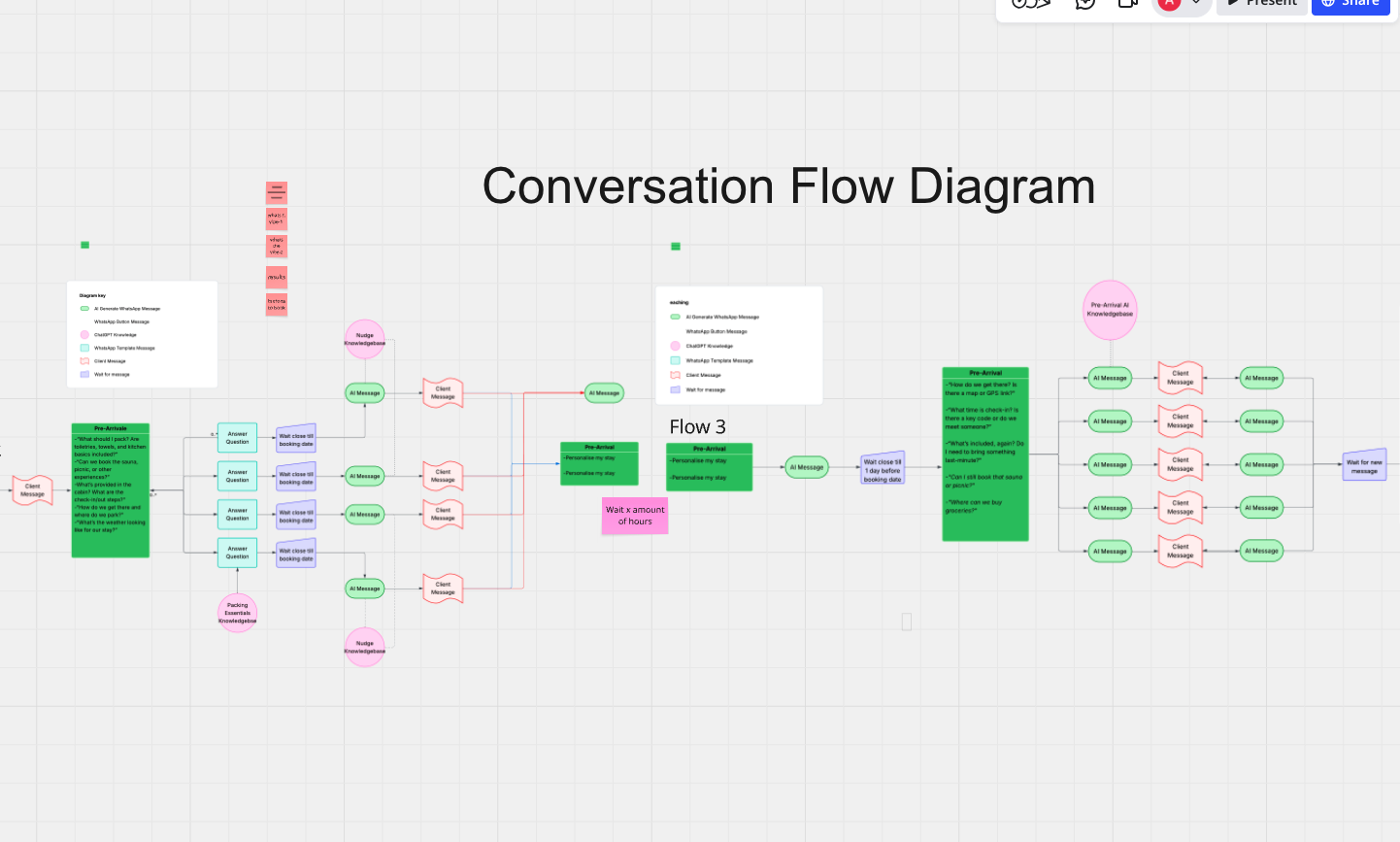
Created high-level conversation architecture showing how guest interactions trigger personalised responses — from welcome messages to FAQ handling to experience delivery.
Defined what events (booking confirmation, day before arrival, check-in) would trigger which communications — and how responses would vary by guest type.
Mapped how the system would handle known questions, ambiguous queries, and escalations to the human team.
Designed the concierge to work across messaging channels guests already used — without requiring a dedicated app or extra login.
Defined clear moments where the AI would hand off to a human host — maintaining warmth without sacrificing efficiency.
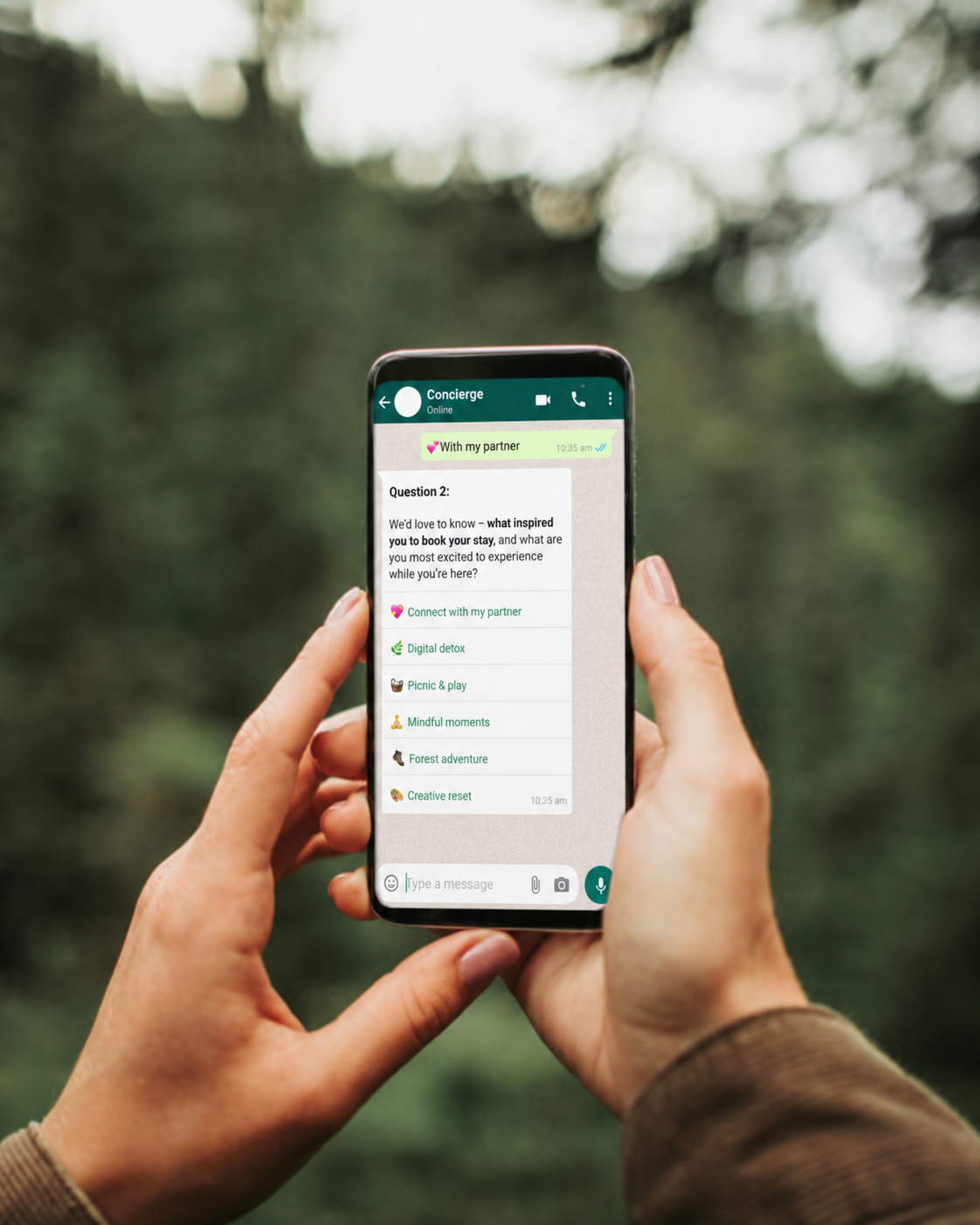
Segmented guests by group type (couples, solo travellers, families, friends) and stay intention (rest, celebration, adventure, creative reset) to generate curated experience recommendations.
Defined 3 primary guest types based on travel party and motivations — creating distinct personalisation pathways for each.
Matched experience categories (physical, digital, hybrid) to guest segments — so every recommendation felt relevant rather than generic.
Used stay intention as a second layer of personalisation — adjusting tone, recommendations, and timing for guests who came for celebration vs. restoration.
Mapped how personalised recommendations could naturally introduce experience add-ons — creating revenue opportunity without feeling sales-led.
Translated journey maps and conversation architecture into structured user stories with prioritisation and acceptance criteria — giving development teams a clear, actionable brief for the MVP.
Prioritised functionality into must-have, should-have, and future phases — keeping the first build focused and deliverable.
Wrote clear, testable criteria for each user story — ensuring what got built matched the guest experience that was designed.
All stories were written from the guest perspective first — keeping the team anchored to the experience rather than the technical implementation.
Balanced guest needs against operational constraints — including team capacity, system integrations, and the retreat's existing booking tools.
Detailed message flows mapping how onboarding, experience delivery, payments, FAQs, and support journeys would work in practice — from the guest's first message to the team's last touchpoint.
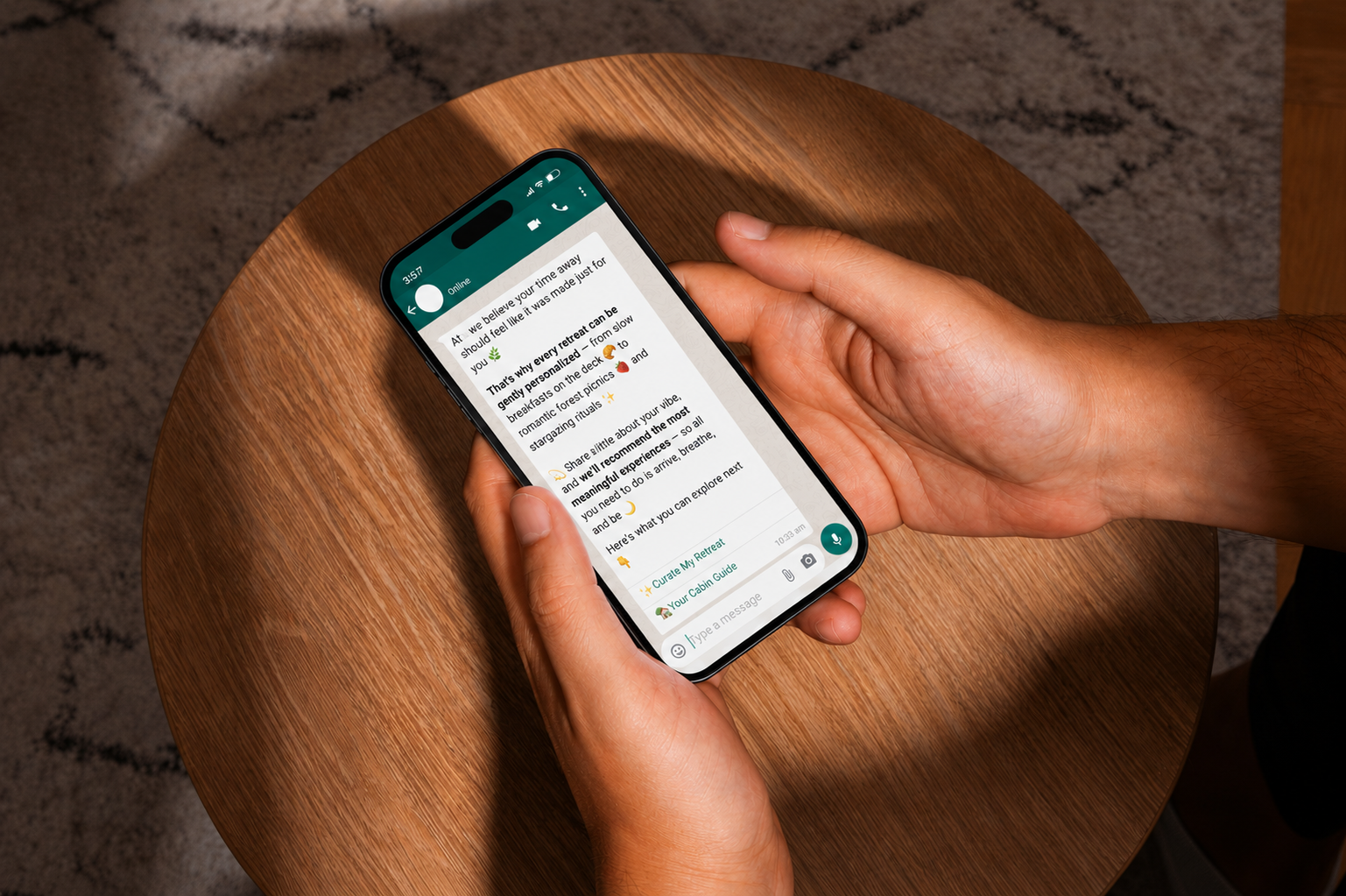
The first message a guest receives sets the tone for everything that follows. Designed a warm, personalised onboarding sequence for each guest type.
Mapped how experience recommendations, booking confirmations, and delivery instructions would be communicated through the concierge.
Designed how add-on experiences could be purchased through the concierge — reducing friction while maintaining trust and clarity.
Built a tiered support structure: common questions handled by the AI, anything requiring judgment escalated to the team with full context.
Communication adapted to guest type, journey stage, and intention — replacing generic messaging with more relevant and memorable interactions.
The framework supports new guest segments, experiences, properties, and seasonal offerings without redesigning the system.
Complete conversation architecture, user stories, decision logic, and acceptance criteria prepared for development.
Personalised recommendations created natural opportunities for add-ons, upgrades, and curated experiences throughout the guest journey.
Designing AI experiences is ultimately a service design challenge. The technology matters less than the thinking behind it — understanding who the guest is, what they need, and when they need it.
This project reinforced that great automation starts with human understanding. Before designing conversation flows, we mapped the questions, uncertainties, and needs guests experience across their journey.
The goal wasn't to answer more questions. It was to anticipate them. Delivering the right information at the right moment creates an experience that feels less like automation and more like thoughtful hospitality.